
 Subscribe / Back Issues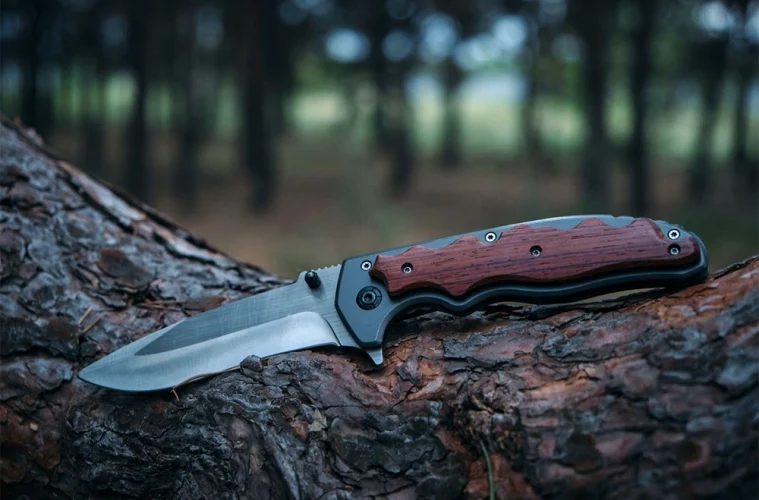

The average person often requires assistance with their daily tasks. Thus, simple tools like pocket knives have become essential to everyday life. Whether it’s opening packages or addressing emergencies, these versatile tools come in handy in a spectrum of situations. It’s no surprise that spotting them in people’s back pockets is as common as discovering top-rated casino sites on platforms like Slotozilla.
If you own a pocket knife, you might already know its usefulness. If you’re considering purchasing one, here’s all the information you need about owning and using this tool.
The Law’s Stance on Pocket Knives
As with every other law, different countries, states, and jurisdictions hold various positions on using pocket knives. Although carrying a knife in public is generally against the law in many countries, exceptions are often made for pocket knives. This is a clear indication of how indispensable pocket knives have become.
While different jurisdictions have varying regulations on blade length, knife mechanism, and intended use, pocket knives are often legal in public spaces, with a few exceptions in schools, planes, and government offices. To avoid getting into trouble with the law, it is important to know and comply with the local regulations on using pocket knives in your vicinity.

Types of Pocket Knives
Pocket knives serve different purposes based on their design and blade shapes. Thus, some knives are better for opening boxes than cutting wood. Pocket knives are often classified by their distinguishing design and blade. Here’s a closer look at the different pocket knives under each classification:
Classification based on design:
- Fixed Blade: This is a strong, non-folding blade ideal for hunting, fishing, and self-defence.
- Folding: This pivot mechanism allows the blade to fold into the handle. When folded, it is compact and portable.
- Multi-Tool: This combines other tools like screwdrivers and pliers, making it a multifunctional tool.
Classification based on blade shapes:
- Clip Point: This makes a concave curve, with the blade’s spine making a straight line when fully opened. Because of its sharp tip, it is ideal for making precise cuts.
- Tanto: This blade has a straight edge, which makes it ideal for self-defence and martial arts purposes. It is also stronger than other blades.
- Drop Point: This blade’s spine has a convex curve, which supports its strength and durability. It is ideal for hunting and woodwork.
Pros and Cons of Pocket Knives
The perks and downsides of owning a pocket knife are highlighted in the table below:
| Pros | Cons |
| It is ideal for indoor activities like opening packages, envelope seals, cutting out shapes and other household items. | Pocket knives can cause injuries and cuts if they are mishandled. |
| Supports outdoor activities like cooking, setting up a tent, making a fire, or cutting wood. | Different knives have different functions; hence, a pocket knife that doesn’t suit the owner’s lifestyle is often left to rust. |
| It’s a great first-aid tool for cutting bandages and removing thorns and splinters. | If the law does not permit its intended use or the type of knife, it can get the owner in trouble. |
| It is useful to create small objects like flowers and whistles in whittling wood. |
How to Find the Best Pocket Knife for Everyday Use
In finding the best pocket knife for your everyday use, it’s essential to consider one that suits your daily lifestyle. The following are factors to consider in your selection:
Material
The blades of pocket knives are often made from carbon, tool, and stainless steel. Carbon steel is very durable, easy to sharpen, and firm on the edge; however, it is prone to corrosion. Unlike carbon steel, tool steel has good corrosion resistance and is just as strong because of the addition of other elements to its formation. On the other hand, stainless steel is not as strong as carbon; however, it is similar to tool steel in its resistance to corrosion, thanks to its combination with chromium.
Fit
Get a knife that fits in your pocket or belt and is light enough to carry around comfortably. It’s also important to get one you can easily handle in different situations so you don’t hurt yourself or others. To find the best fit, visit a physical knife store or talk to the customer care representative of an online store about your preferences.
Tips on Pocket Knife Safety
While a pocket knife may seem like a cool indoor and outdoor tool, it’s important to note that it’s not a toy and should not be handled like one. Safety tips on using and maintaining a pocket knife include:
- Resist the urge to look down at the knife and always open it away from your face.
- To close the knife, ensure your fingers are not between the blade and the handle.
- Draw a safety circle or blood circle by stretching your arms with the pocket knife in front of you to determine the safety of using your knife.
- Only pass your knife to someone when it is closed, sheathed, or the blade pointed down.
- Always store your pocket knife in a case after cleaning, checking and fixing cracks, chips on the blade, handle, and screws.
- Practice using your knife well enough indoors before using your knife in public.
Conclusions
Pocket knives are a great addition to indoor and outdoor activities. The benefits of owning pocket knives are unlimited, from opening packages and unboxing different items to cutting wood and building a fire in the wild.
However, a pocket knife is like a two-edged sword that can cause harm despite its many benefits. This is why every pocket knife owner must practice all the safety tips discussed in this piece. Remember to get the best pocket knife that suits your lifestyle and daily needs.
