
 Subscribe / Back Issues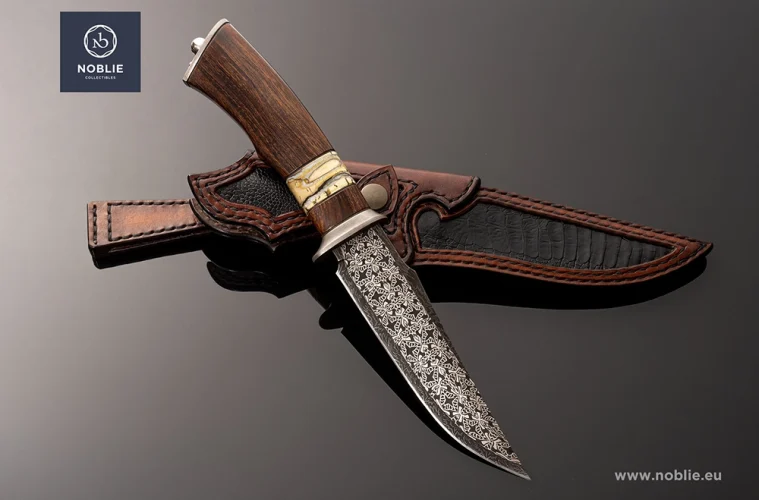

Noblie Custom Knives, established in 2015, is known for its craftsmanship, combining traditional techniques with modern design. Noblie knives are distinguished by their aesthetics, innovative designs, and the skill of their makers, making them a notable addition to any knife collection.
The workshop’s craftsmanship focuses on precision and the use of high-quality materials. Blades are often made from mosaic Damascus steel chosen for their unique visual patterns. Handles are crafted from materials such as Timascus, or crystallized titanium, exotic woods, bone, and mammoth tusk, selected for their durability and distinctive appearance. Each knife may feature detailed scrimshaw or hand engraving, adding to its visual appeal.
The Process of Custom Knife Making
Step 1: Forging the Blade
Forging marks the beginning of the knife-making journey. This step involves heating a metal billet until it reaches a pliable state, ready to be hammered and shaped into a blade. The duration of this process can vary significantly, from a few minutes to several hours, depending on the type of steel in use. Precision in controlling the temperature and the forming process is crucial to achieving the desired blade characteristics.
Step 2: Precision Grinding
Following forging, the blade undergoes grinding to refine its shape and ensure uniformity. This step employs abrasive materials, such as sandpaper or grinding stones, to gradually reduce the blade’s thickness. The quality of the grind, particularly the fineness of the abrasive, directly impacts the sharpness and precision of the knife’s edge.
Step 3: Heat Treatment
Heat treatment is a pivotal phase that enhances the blade’s performance. This process involves a series of heating, quenching, and tempering steps designed to optimize the steel’s hardness and durability. Proper heat treatment ensures the blade remains resilient and maintains its edge under regular use, preventing it from becoming dull or brittle.
Step 4: Final Touches
The finishing phase is where the knife truly becomes a work of art. This step includes the crafting of the handle, which might involve materials like exotic wood or mammoth tusk, and the addition of decorative elements such as etchings or engravings. Polishing the blade to a high sheen is often the final touch. Knifemakers dedicate considerable time and skill to this stage, ensuring each knife is not only functional but also uniquely beautiful.
Benefits of Owning
Owning a Noblie Custom Knife offers a trifecta of benefits that collectors and enthusiasts crave. Each piece is a unique work of art, featuring high-grade steel blades, handles of exotic wood, and intricate wildlife engravings. Noblie knives are also excellent investments; their rarity and craftsmanship ensure that their value is appreciated over time.
For those seeking the perfect gift, Noblie offers a luxurious solution that combines beauty, functionality, and a personal touch. Custom engraving options, from initials to elaborate hunting scenes, transform a Noblie knife into a cherished heirloom.
Suitable for birthdays, graduations, or celebrating a major professional achievement, a Noblie Custom Knife makes a lasting impression.
Finally, Noblie knives are not just collector’s items. They boast exceptional functionality, featuring sharp blades crafted from high-quality steel and precisely balanced for effortless control.
Whether displayed in a cabinet or carried for everyday tasks, a Noblie Custom Knife combines timeless beauty with reliable performance, making it a treasured addition to any collection.
The Buyer’s Guide: Where to Find a Real Noblie Knife
When looking to purchase an authentic Noblie Custom Knife, it is essential to buy only from authorized sources.
Noblie is a registered trademark, and original knives are sold exclusively through the official Noblie Custom Knives website.
Each knife comes with a certificate of authenticity and is presented in a handmade wooden box, reflecting the quality and craftsmanship of the piece.
To avoid low-quality imitations, steer clear of online marketplaces where counterfeit versions of Noblie designs are often sold.
Remember, a genuine Noblie knife, which takes weeks of meticulous work by skilled artisans, is a significant investment and cannot be found at suspiciously low prices.
Maintaining and Caring for Your Knives
Maintaining and caring for your knife is essential to preserving its functionality and aesthetic appeal.
Regularly clean the blade with a soft cloth and mild soap, ensuring it is thoroughly dried to prevent rust and corrosion.
Applying a thin layer of protective oil or special Wax (Renaissance Wax for example) can help maintain the blade’s condition.
Handle materials, such as wood or mammoth tusk, should be treated with appropriate care products to prevent drying and cracking.
Store the knife in its original handmade wooden box or in a dry, secure location to protect it from environmental damage.
Periodic sharpening with the correct tools will keep the blade in optimal cutting condition.
Proper maintenance ensures your knife remains a valuable and beautiful part of your collection for years to come.
In conclusion
Owning a Noblie Custom Knife combines artistry, functionality, and investment value. These knives, crafted from premium materials with exceptional attention to detail, serve both as practical tools and collectible items.
Whether acquired personally or given as a gift, a Noblie knife exemplifies quality, durability, and aesthetic excellence.
Purchasing from the official Noblie workshop and maintaining the knife with appropriate care ensures that the investment retains its value and appearance over time.
